What Does Soft Tissue Release Therapy Involve? A Local Athens, GA Guide From Licensed Massage Therapists

Soft Tissue Release, or STR for short, is a hands-on way to fix tight muscles.
Your therapist puts firm pressure on one spot. While they hold that pressure, you (or them) move your arm or leg into a stretch. That is the whole trick. Pressure plus stretch.
Last week a mama walked into our spa almost in tears. Her shoulder had been hurting for three months. She tried heating pads. A foam roller that her sister gave her. Even a chain massage. I felt better for two days. Then the knot came right back.
She is not alone. Over 124 million American adults reported some kind of muscle or joint problem in 2015, per the Burden of Musculoskeletal Diseases in the United States report. So if your body hurts, you have plenty of company.
Most folks who come see us at The Body Temple Spa already tried the regular stuff. Tylenol. The Epsom salt bath. A nice Swedish on their birthday. They want something that works on the spot that hurts.
If you've been searching for Soft Tissue Release Therapy in massage near Athens GA, this guide is for you. We will talk about what it is, what happens in a session, and how it differs from the back rub your husband gives you on the couch.
This idea comes from a book by Mary Sanderson, who pretty much wrote the book on STR. She says STR is “a simple, efficient technique combining precise pressure – locking in to the relevant tissues – with active or passive movement to stretch the fibres.” Fancy words, but it just means: hold the muscle still in one spot, then stretch the rest.
This combo wakes up your muscles in a way regular rubbing can not. Sanderson says STR helps with adhesions and tissue repair. Adhesions are little sticky spots in your muscle. STR helps un-stick them.
A normal session at our Athens spa goes like this:
1. We sit and talk for a few minutes about where you need help.
2. Your therapist works on the specific problem areas you mention.
3. You move with the stretch (or we move you, if we see a lack of flexibility)
4. Before you leave, you will have a protocol recommendation.
Want to come in and feel it for yourself? Book a session with our Athens, GA massage therapist.
How Does Soft Tissue Release Work?
Okay first, what even is "soft tissue" The book The Soft Tissue Release Handbook by Sanderson and Odell says soft tissue is your muscles, fascia, tendons, and ligaments. Basically all the structure of the body that are flexible. Not bones.
Fascia is a cool thing. Imagine a sandwich wrap, but inside your body. It wraps around your muscles. When that sandwich wrap gets sticky or tight, you feel it. You can't turn your head. Your hip won't open up. Your back gets that nagging ache.
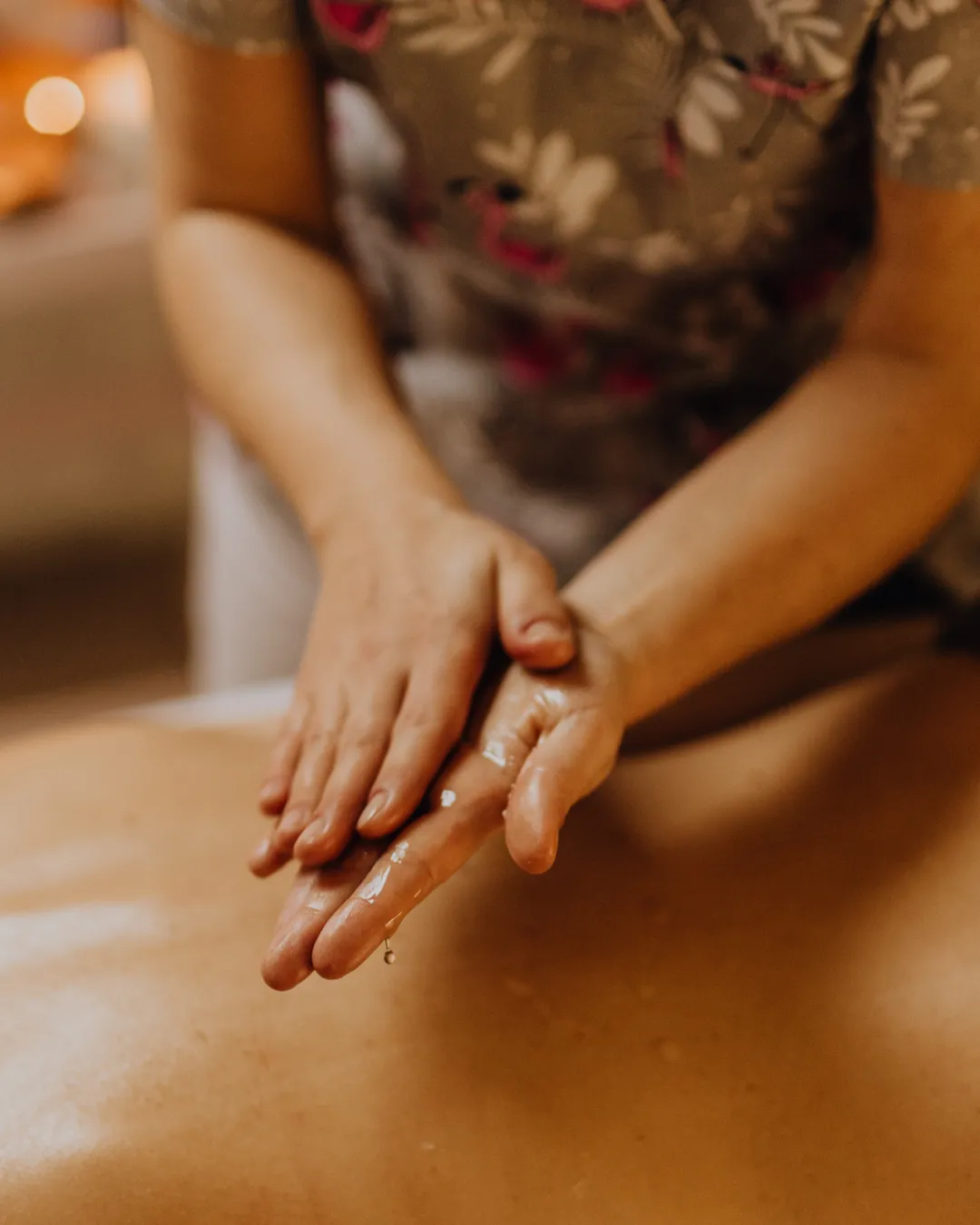
STR works in two parts. First, we lock down the tight spot with a thumb, fist, or sometimes elbow. Second, while we hold that lock, you move. The stretch happens right where we are holding.
Here is the cool part. A lot of times your muscle is not really hurt. Your brain just keeps it tight on purpose, like it is protecting you. Niel Asher Education says STR works by talking to your nervous system, leading to a "spontaneous release of the injured muscle."
Plain English: STR tells your brain, "Hey buddy, you can let go now. We are safe."
What Are the Techniques Used in STR?
There is not just one way to do STR. A good therapist has lots of moves. Here is what we use most:
1. Active STR. You move while we hold the spot. The brain is more involved this way.
2. Passive STR. We move you. You just relax. Good for when you are too tense to move yourself.
3.Locking with thumb, fist, forearm, or elbow. Different size muscles, different size tools. Little neck muscle? A thumb. Big ol' glute? Out comes the elbow.
4. Pin-and-stretch. Real close to STR. The folks at Denver Integrative Massage School describe it as "a method of stretching involving shortening the muscle length by pinning the muscle, then taking the muscle through the full range of motion."
5. Trigger point work. Sometimes a knot is so stubborn we work it first before the stretch will take.
In our Athens shop we mix passive STR with trigger point work a lot. Especially for clients walking in after a 12-hour shift, or after grading papers all weekend at UGA. Too tired to move themselves. So we do it for them.
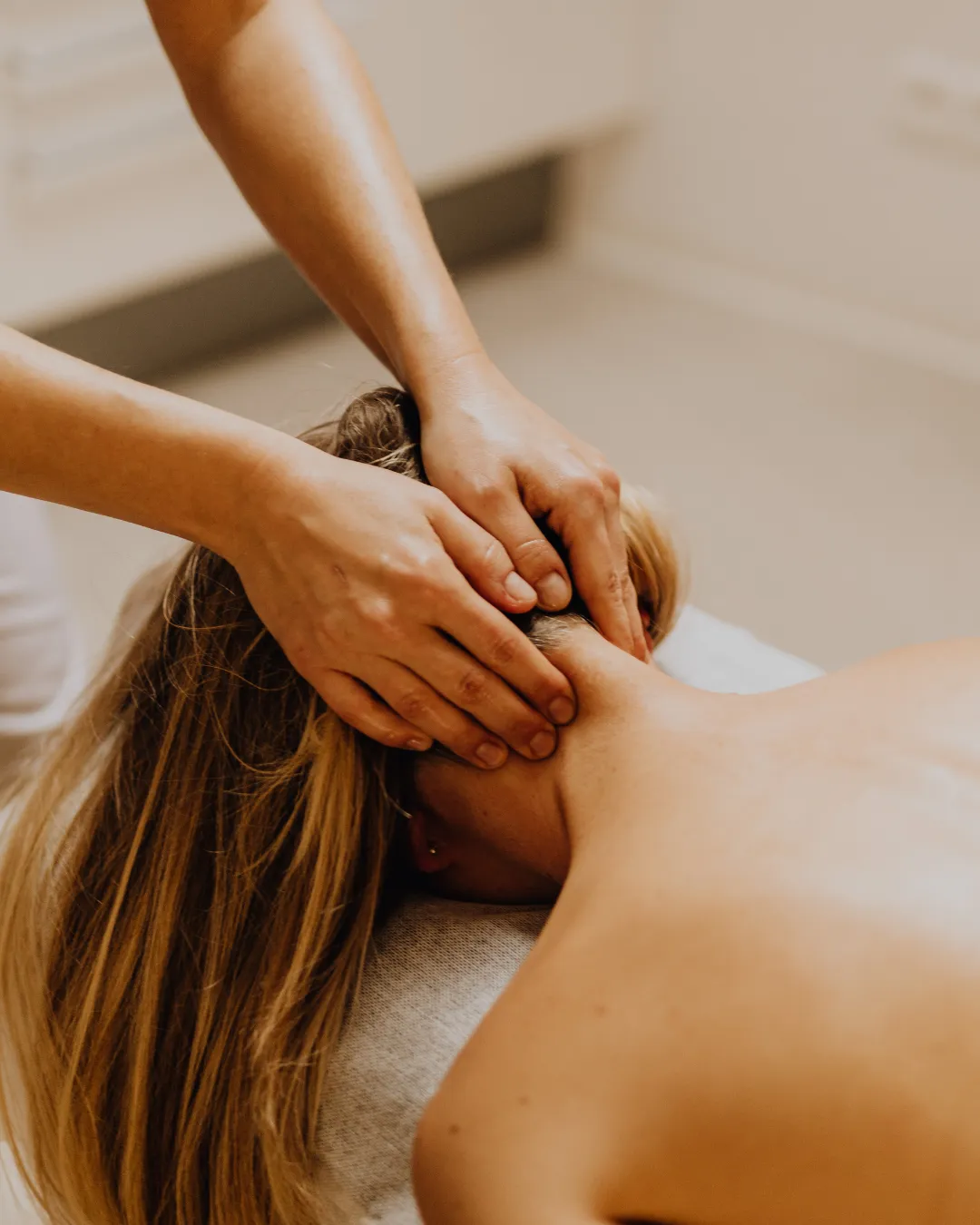
What Will My Session Be Like?
This is the question new folks ask the most. Here is what to expect:
1. We talk first (5 to 10 minutes). Tell us what hurts, what you tried, what has and has not work. We listen, I promise. Your therapist might also watch you bend and twist a bit.
2. What to wear. Loose clothes or workout clothes. STR is not like a Swedish where you are under a sheet. We need you to be able to move.
3. How hard does it press? Firm. Not torture. You should feel it, but not be holding your breath. If you are, tell us.
4. How long? Usually 30 to 60 minutes. If you got a few problem spots, we go 90. Research summarized by the NIH National Center for Complementary and Integrative Health found that 60-minute massages were more effective than shorter ones for chronic neck pain, so don't shortchange yourself with a quick 15-minute rub.
5. After you leave. A little soreness the next day or two is normal. Pro Fusion Rehab explains that post-massage soreness "is very similar to the delayed onset muscle soreness (DOMS) you feel after a tough workout." Drink your water. Take a warm shower. Don't go run a 5K the same day.
True story. Had a teacher come in last fall after a long week of testing. Her shoulders were up around her ears. When she got off the table she said, "I feel like I just got back into my own body." That is what we are going for.
Sounds like what your body needs? Reserve your spot with one of our therapists.
Where on the Body Can STR Be Used?
Pretty much anywhere you got muscle. Here are the spots we work on the most:
Body Area Why People Come In
Neck and shoulders Desk workers, students, phone scrollers
Lower back and glutes Long drives, sitting, after pregnancy
Hips and hip flexors Sitting, running, brand new mamas
Hamstrings and quads Runners, cyclists, weekend warriors
IT band Knee pain that is not really a knee thing
Calves and feet Heel pain, nurses on their feet all day
Forearms Painters, climbers, manual workers
Here is something most people don't know. The spot that hurts is not always where the problem is.
Take tight calves. Mayo Clinic Health System notes that "tight calf muscles often play a role in heel pain." So your foot hurts, but the bad guy is your calf.
Same with hips and your low back. The Cooper Institute says tight hip flexors pull your pelvis forward and strain your low back. So your back hurts, but your hips are the problem.
This is why we look at the whole picture before we just dig into the spot you point at.
STR vs. a Regular Massage. What's the Difference?
Folks ask this all the time. "Is this just a deep tissue massage?" Not really.
The American Massage Therapy Association says "a deep tissue massage is similar to a Swedish massage, but with the massage therapist using slower strokes and more pressure." STR is different. It is not about pressing harder. It is about pressing in one spot and stretching at the same time.
Here is a quick chart:
Soft Tissue Release Swedish Massage Deep Tissue Massage
Goal Fix a stuck spot Relax and de-stress Loosen tight muscles
Pace Short holds with stretch Long flowing strokes Slower, deeper strokes
Your job Move with us Just lay there Mostly just lay there
Pressure Firm in one spot Light to medium Firm all over
Best for A specific problem Stress and sleep Chronic tightness
Just want to feel like a noodle and float home? Swedish.
Got something specific going on, a hamstring that won't let go, a hip that feels stuck, a shoulder that bugs you when you reach up? STR is the one.
Lots of our regulars do both. STR every few weeks for the body. Swedish in between for the brain. Both are good.
Where Can I Get STR Near Me in Athens, GA?
Now the big one. Where do you go in Athens?
Local matters. STR works best when you can come back. The first session might give you a lot of relief. The second session two weeks later? That is when it really sticks. Driving to Atlanta is not realistic. Find someone in town and stick with them.
Here is a little checklist when you pick a therapist:
1. Are they licensed? Big one. Per Georgia Code § 43-24A-8, nobody can do massage in Georgia without a license from the Georgia Board of Massage Therapy. They have to do at least 500 hours of training. Always check.
2. Do they actually do STR? Just ask. If they say "deep tissue" but can't explain the lock-and-stretch technique, it is probably not real STR.
3. What do reviews say? Look for words like "specific," "explained," "felt the difference."
4. Does the place feel right? Clean, calm, friendly front desk. You should feel taken care of from the second you walk in.
Common stuff we see in our center: UGA grad students with neck pain. Nurses from St. Mary's and Piedmont with cranky low backs. New mamas needing hip work. Runners getting ready for the next race. Remote workers who turned the kitchen table into an office.
We have been here in Athens since 2020. Folks drive in from Watkinsville, Bogart, Bishop, Winterville, Commerce, Madison. Pretty much anywhere within an hour of our spot on Prince Ave.
Ready To Feel Like Yourself Again?
📍 The Body Temple Spa — 2530 Prince Ave Unit # 21, Athens, GA 30606
📞 Call (959) 400-9242 to book. Or see reviews and hours on Google and book online.
Open 7 days. Late hours till 8 PM most nights, because you don't get off work at 4.
Your body works hard for you every day. Let us take care of it. Call us and let's get you on the table.