
Is Emotional Release Normal During a Massage Session in Athens, GA?
Is It Normal to Cry During a Massage?
100% YES!
Dr. Peter Levine spent decades studying how the body handles stress. In his book Waking the Tiger, he explains that when your body finally feels safe enough to drop its guard, all the stress it's been locking away can bubble up to the surface. Therapists call this somatic release.
But let me tell you what that actually looks like in real life. Because understanding it in your head is one thing. Living through it on a massage table is something totally different.

What It Really Feels Like When It Happens
David works at UGA. Single dad. Two kids. His job is stressful and his ex-wife doesn't make things easier.
He came in for neck pain that wouldn't quit.
His first massage was nice. Second one too.
Nothing weird. Just good pressure, sore muscles getting worked on, the usual stuff.
The third visit was different.
His therapist started working on this spot right where his neck meets his shoulder. And something just... broke open. Like a dam that has been holding back water for years suddenly cracked.
David told us later, "I wasn't sad about anything specific. I wasn't thinking about my divorce or my bills or anything like that. But tears just started coming. I tried to stop them and I couldn't."
He sat in his truck in our parking lot for twenty minutes after. Just sat there. Then he called his brother. They hadn't talked in six months over some stupid argument neither of them could even remember anymore.
He told us next time he came in, "Whatever y'all loosened in my neck went way deeper than muscle.
My brother and I talked for a whole hour. The first real conversation we had was "I don't know how long."
Then there's Maria. She owns a cleaning company here in Athens. Works six days a week. Her back was so messed up she couldn't lift a mop bucket without wincing.
During her first deep tissue massage, the therapist hit this knot near her lower spine. And Maria just busted out laughing. Not a little giggle. Deep belly laughing like something was the funniest thing she ever heard.
She gasped out between laughs, "I am SO sorry, I have no idea why this is happening."
Her therapist stayed calm. Said, "Your body's getting rid of something it's been holding. Just let it happen."
The laughing went on for maybe a minute. Then it switched to crying. Maria went from cackling to sobbing in like 30 seconds flat.
After the session she told us, "That was the weirdest thing I ever experienced. But when it stopped I felt... empty? But in a good way. Like somebody cleaned out a closet that was stuffed full of junk for years. I swear I drove home feeling ten pounds lighter."
Dr. Levine talks about this in another book called In an Unspoken Voice. He says laughter, shaking, crying - all that stuff is your body's way of dumping out old stress and trauma. It ain't broken. It's actually your body doing what it's supposed to do.
The Different Ways It Shows Up.
No two people experience this the same way.
But certain things keep happening over and over.
Tears That Sneak Up
Sharon teaches third grade. She's one of those teachers who's always smiling, always patient, always "on" for her students.
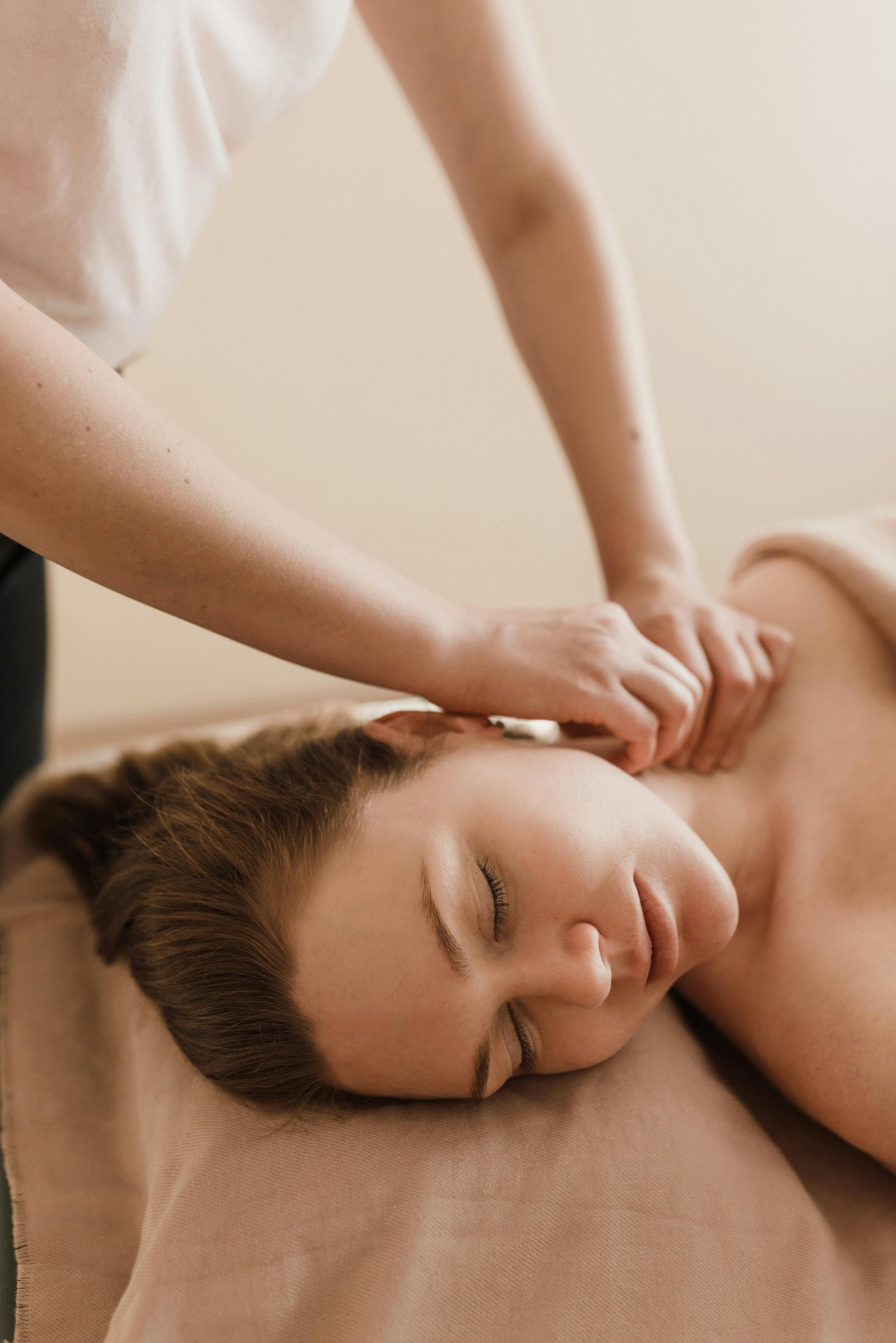
She was lying face-down getting a back massage. Everything felt normal. Then she noticed the face cradle felt damp. She thought maybe the person before her had wet hair or something.
Then she touched her own cheek and realized, "Oh... that's coming from me."
She wasn't even sad. Couldn't name a single thing bothering her. But her body was crying anyway. She walked out of there feeling lighter than she had in months.
Shaking That Comes Out of Nowhere
Keisha played volleyball in college. Now she coaches girls soccer and still works out five days a week. Real athletic, tough as nails.
During a sports massage, both her legs just started shaking. Not like shivering when you're cold. More like trembling. Like they had a mind of their own.
She got scared. Tensed up. Her therapist said real soft, "Just breathe. Let your body finish what it started. You're safe."
The shaking lasted maybe 45 seconds. When it stopped, Keisha said her legs felt brand new. She told us, "It was like I've been dragging invisible weights around since college and somebody finally cut them loose."
Dr. Levine says this shaking is your nervous system finishing a stress response that got interrupted . Like your body started to run from danger but never got to complete it. So the energy just stayed stuck in there.
Warmth Spreading Through You
Marcus works in tech. Remote job, sits at a computer all day. His upper back stays in knots.
He was getting deep pressure between his shoulder blades when he felt this warmth pour through his whole chest. He said it felt like being wrapped in a warm blanket from the inside.
Then he took the biggest breath he'd taken in he didn't even know how long. I didn't plan it. His body just decided it was finally safe enough to breathe all the way down.
Old Memories Coming Back
This one gets people the most.
Diane is in her late 40s. I work as a nurse. She came in with headaches that wouldn't stop.
Her therapist was working on her neck and shoulders. And suddenly Diane wasn't on that massage table anymore. She was six years old, sitting on her mama's porch swing. She could smell the honeysuckle. See the lightning bugs. Hear the screen door creak.
She hadn't thought about that porch in 25 years. But her body remembered.
She whispered to her therapist after, "That was the safest I ever felt in my whole life. Sitting on that swing with my mama. And I realized... I forgot what safe even feels like as a grown up."
Ray is a landscaper. Quiet guy, keeps to himself. Halfway through a massage on his back, he went completely still. Stopped breathing for a second.
After the session he sat there on the table for a minute. Then he said, "My pawpaw used to rub my back when I was little. At bedtime. Just his big rough hand going in circles til I fell asleep. He's been gone fifteen years now."
He swallowed hard. "But laying there with somebody taking care of my back... my body just pulled that memory right up. Like it's been stored in my muscles this whole time."
He looked embarrassed. Said, "Sorry about that."
His therapist looked him dead in the eye and said, "Don't you ever apologize for loving somebody."
Why Does Your Body Hold Onto Stuff Like This?
There's this doctor named Bessel van der Kolk. He wrote a whole book called The Body Keeps the Score. The main idea is this: when stressful stuff happens, your mind might move on, but your body files it away in your muscles and tissues.
Think about it like this. Something stressful happens. Could be a car accident. Could be a bad breakup. Could be years of a terrible job. Your body goes into alarm mode. Muscles get tight. My heart beats fast. Everything braces for impact.
But here's the thing - we don't actually run from the danger like our bodies want us to. We just sat there. We stay in the bad job. We smile through the family dinner even though we're dying inside. We answer emails while our shoulders climb up to our ears.
The alarm goes off but nobody ever sounds the all-clear.
Bruce McEwen was a researcher who studied this. He called it "allostatic load" - basically the damage from running your body in emergency mode for too long. Your muscles just mold around that stress. They get used to being tight.
Lisa teaches kindergarten here in Athens. She told us, "I had zero clue I was carrying that much tension until your therapist touched my upper back and I realized my shoulders were glued to my ears for I don't know how long. Years probably. Just walking around clenched like a fist with no idea I was even doing it."
There's another researcher named Dr. Stephen Porges who figured out something called polyvagal theory. Basically your nervous system has two channels. One is "survive mode" - that's when you're stressed and on alert. The other is "rest and repair mode."
Most of us are stuck in survival mode all the time.
But safe touch - like a good massage from somebody you trust - can flip that switch. According to Mayo Clinic research, a one-hour massage lowers cortisol (your stress hormone) in your body while also releasing serotonin. When your body finally gets the signal that it's safe, everything it been holding onto can come flooding out
That's the tears. That's the shaking. That's years of saying "I'm fine" finally telling the truth.
How Do Good Therapists Handle This?
Let me tell you about James.
James is a retired firefighter. Big guy. Built like a brick wall. His wife bought him a gift card to our spa for Christmas. He almost threw it in a drawer and forgot about it. He told us straight up, "This spa stuff ain't my thing."
But his wife kept bugging him so he finally came in.
Twenty minutes into the massage, his therapist was working between his shoulder blades. The whole energy in the room changed. James went completely silent. His breathing got choppy. Jaw clenched tight. Eyes red but no tears coming.
After the massage ended, he just sat on the edge of the table staring at the floor. His therapist didn't push him to talk. Didn't ask if he was okay. Just stood nearby and waited.
Finally James said real quietly, "In 2006 I pulled a little girl out of a burning house. She was four years old. She didn't make it. I never told nobody what that did to me. Not my wife. Not my partners at the station. Nobody."
He looked up at his therapist. "But something about being on that table with somebody handling me gently... taking care of me... the lid just came off."
His voice cracked a little. "Is that normal?"
His therapist said, "What you just did took more courage than anything I've seen in this room. And I've been doing this a long time."
James's wife called us a month later. She said, "I don't know what y'all did, but he's different now. Softer. He gets down on the floor and plays with the grandkids. He didn't used to do that. Whatever he let go of on that table... it changed something."
Georgia requires therapists to complete 500 hours of training before they can get licensed. At The Body Temple Spa, our therapists also do extra training in trauma-informed care. Because holding space for people when they fall apart - that could be part of the job too.
What Should You Do If This Happens to You?

First thing - don't fight it. I know that's hard, especially if you're the type who holds everything together for everybody else. The one who says "I'm good" fourteen times a day even when you're not.
On that massage table, you don't gotta be good. You just gotta be honest.
If tears come, let them come.
Breathe slowly and deep into your belly. Research shows that deep breathing actually switches on the calming part of your nervous system. According to the Cleveland Clinic, your parasympathetic nervous system is responsible for "rest and digest" functions - the opposite of your body's "fight or flight" response. Deep breathing activates this system and tells your body "we're safe now."
If you need a break, just lift your hand a little. Any good therapist will notice and check in with you.
After your session, don't rush out of there. Sit for a minute. Drink some water. The American Massage Therapy Association says hydration and rest are extra important after emotional sessions.
One of our regular clients keeps a blanket in her car. She told us, "After sessions like that, I sit in my car for 15 minutes. No phone. No radio. Just me and whatever came up. It's become like a sacred thing for me."
There's this book called Burnout by Emily and Amelia Nagoski. They talk about how gentle movement helps your body finish processing stress. So maybe take a slow walk around the block after. Do some easy stretches. Just stand outside and breathe for a minute.
And be kind to yourself. You just stopped pretending everything's fine. That takes guts.
Finding the Right Therapist for You
When you´re looking for a massage therapist, look for words like "trauma-informed" on their website. Read the reviews. Look for people saying things like "I felt safe" or "they were so gentle" or "I felt held."
When you call a book, you can ask, "If I get emotional during the massage, is your therapist okay with that?" The right therapist won't even blink at that question.
Walk away from anyone who tells you to "calm down" when you´re upset, or who keeps pushing through without checking on you, or who can't show you a valid Georgia license.
At The Body Temple Spa, this is what we're trained for. Deep tissue, Swedish, lymphatic drainage, sports massage - whatever your body needs. And if old feelings come up? That's okay. That's actually what we're here for.
We see people from all over - Athens, Watkinsville, Winder, Commerce, Madison, Bogart, and beyond.
Your Body Already Knows What It Needs
Every single person who's cried on our table says some version of the same thing afterward: "I didn't know I needed that."
But your body knew. It was just waiting for you to get still enough and safe enough to listen.
You don't have to carry everything by yourself. You don't gotta keep saying your fine when you're not.
Come lay it down. All of it. The stress. The old hurt. The stuff you've been holding onto for years. We got you.
Call us at (959) 400-9242 or
visit thebodytemplespas.com.
We're at 2350 Prince Ave Unit # 21 GA 30606.
We're open Monday through Saturday from 8 AM to 10 PM.
Sundays we're open 8 AM to 6 PM.
First time visitors can get a 60-minutes Deep Recovery massage for $125.
You're carrying enough already.
Time to put some of it down.